
Zoning & jurisdiction
Which residential zone the parcel sits in — R-1A, R-1B, R-1C, R-2, R-3 in Boise — and whether ADUs are allowed by right. Each Treasure Valley city has its own code.
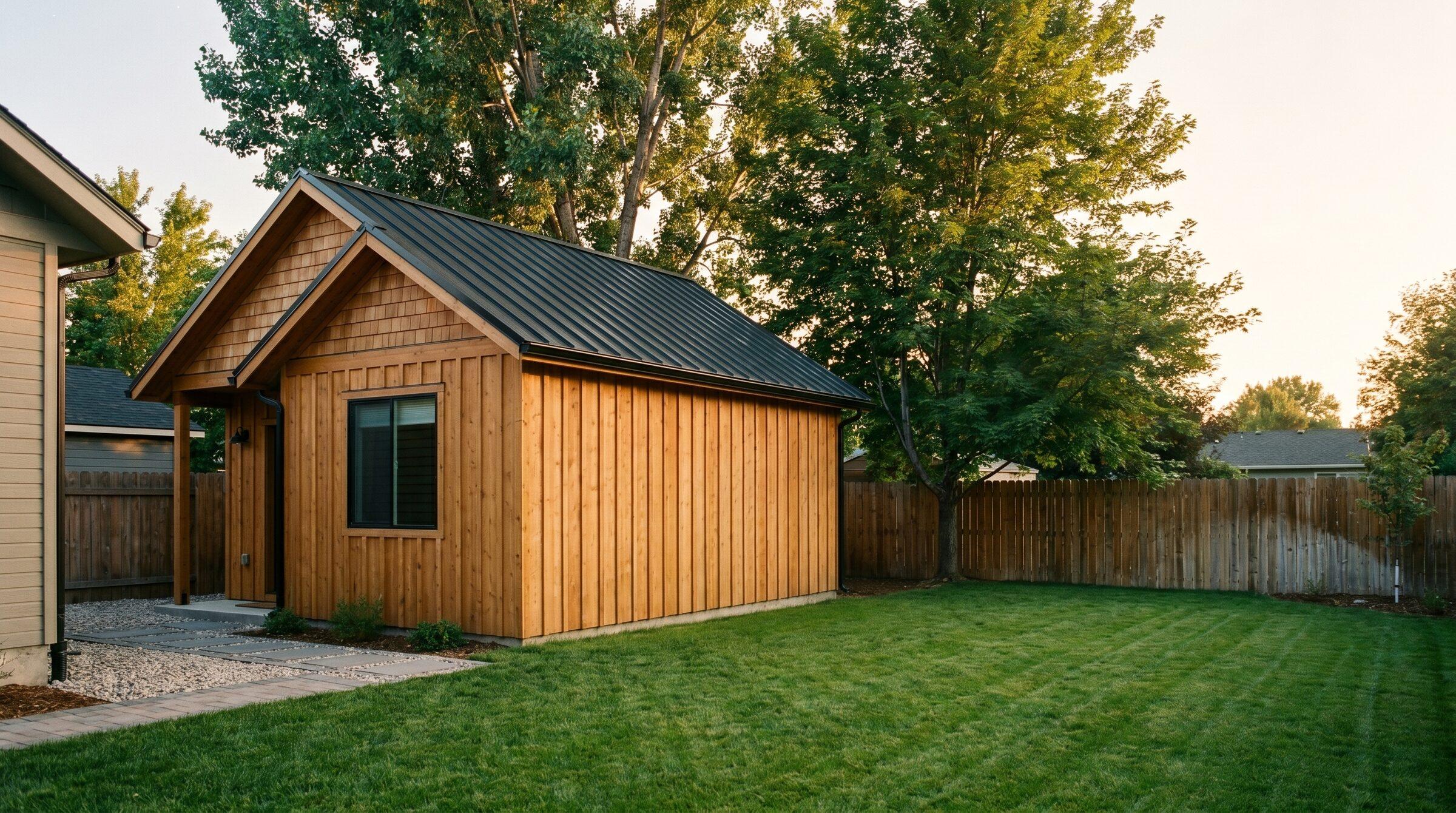
Feasibility · Lot Check · Boise & Treasure Valley
Whether your property can support an ADU comes down to zoning, setbacks, access, utilities, lot conditions, and pre-approved plan fit. Here's how each one works — and how to figure out yours before spending money on design or permits.
For most Boise homeowners in R-1A, R-1B, R-1C, R-2, and R-3 zones, the answer is yes — provided the lot meets the 5,000 sq ft minimum, setbacks leave a buildable envelope, and there's no HOA prohibition. About 70% of Boise lots in eligible zones can host at least one of the city's six pre-approved ADU plans without modification. The remaining 30% have constraints — substandard size, easement coverage, hillside or historic overlays, septic systems on the rural fringe, or HOA rules that override the city's permission.
"Feasibility" is the practical answer to whether your specific lot can hold an ADU you'd actually want to build — and what it would take to get there. The rest of this page walks through what we evaluate during a free lot check, so you can decide whether to invest in plans, surveys, or engineering.
Eight factors decide whether a Boise property is a candidate. Zoning is the first gate; the rest shape what kind of ADU is actually buildable.
Which residential zone the parcel sits in — R-1A, R-1B, R-1C, R-2, R-3 in Boise — and whether ADUs are allowed by right. Each Treasure Valley city has its own code.
Side, rear, and front setbacks shape the buildable envelope. Easements (utility, drainage, access) can take additional square footage out of play.
Construction access, post-occupancy parking, alley access vs front driveway, and whether the lot can satisfy the additional ADU parking requirement.
Sewer lateral capacity, water service sizing, electrical service capacity, and gas (or all-electric). Some lots need utility upgrades that add real cost.
Whether the lot fits a detached ADU footprint, a garage conversion, or a backyard cottage — and which makes the most sense for your goals.
Slope, drainage patterns, mature trees, rock soil, retaining wall requirements, and any natural conditions that affect cost or buildability.
Which of Boise's six pre-approved plans (Goldfinch, Waxwing, Kingfisher, Kestrel, Sandpiper, Osprey) can permit on your specific lot.
HOA architectural rules, historic overlays, hillside review triggers, and floodplain rules can affect what's possible regardless of city zoning.
Boise allows ADUs in most residential zones — R-1A, R-1B, R-1C, R-2, and R-3 — on lots of at least 5,000 sq ft. The City's Planning & Development Services division publishes the zoning map online; checking your zone takes about a minute. Surrounding Treasure Valley cities each have their own code: Meridian under its Unified Development Code, Eagle with stricter architectural compatibility rules, Garden City, Star, Kuna, Caldwell, and Nampa each with their own setbacks and parking provisions. The lot check pulls the right code for your jurisdiction.
ADU size is capped at 900 sq ft of finished living area (raised from 700 in the 2023 Modern Zoning Code) in Boise — which is why the city's pre-approved set tops out at the 695 sq ft Kestrel. Anything larger requires a different review path and rarely receives approval as a standalone accessory dwelling.
Setbacks define the buildable envelope on your lot — the area where structures can legally sit. Subtract setbacks from each edge, subtract easements, subtract the existing house footprint, and what's left is what you have to work with.
5 feet from the side property line for accessory structures. Some narrow infill lots have reduced setbacks under specific overlays.
10 feet typical, reduced for single-story structures in some districts. Corner lots and lots with alley access have separate rules.
Typically 6–10 feet between structures for fire separation and egress, depending on construction type and zone.
Utility, drainage, and access easements are subtracted from the buildable envelope. A 10-foot utility easement along the rear can eliminate 100+ square feet of buildable area on a typical Boise lot.
For more detail, see our Boise ADU setbacks guide.
Detached ADUs need a way to move framing materials, a foundation pour, and finish materials to the build site. Lots with no alley access and tight side yards (sub-4 feet) require crane time, which adds $3-8k to the build.
Boise typically requires one additional off-street parking space per ADU. Driveway, pad, or carport — doesn't have to be a garage. Lots that already have alley access often satisfy this without a new curb cut.
Tenants need a path from the public right-of-way to the ADU front door. On rear-yard detached units, that path usually runs along a side yard — which means side yard setbacks need to accommodate a 36-inch walking surface.
Utility access drives both feasibility and cost. Most Boise lots can share the main house's services. Where they can't, the upgrade cost can push a project from "great deal" to "wait, the math doesn't work."
Boise allows sharing the main house's sewer lateral in most cases. If the existing lateral is undersized or in poor condition, a new lateral costs $4-10k. We assess by pulling the sewer card from the city.
Most lots can share the main house's water service. A new 1-inch service is required if the combined fixture count exceeds the existing service capacity — typically $3-6k including the meter setter.
A 200A main panel on the primary residence usually has enough headroom for a 100A ADU subpanel. Older 100A or 125A main panels need an upgrade, typically $2-5k. If Idaho Power requires a transformer upgrade at permit, add another $3-10k.
Gas runs cost extra trenching. Many new Boise ADUs go all-electric (mini-split heat, induction range, heat pump water heater) to skip the gas extension and meet energy code targets more easily.
Full breakdown: Boise ADU utilities guide.
Lots that fit a detached ADU usually fit a garage conversion too, but the reverse isn't always true. Conversion uses existing square footage and reuses the foundation/walls/roof — typically 30-50% cheaper than a ground-up detached build, but locked to the garage's existing footprint. Detached gives you up to 900 sq ft of buildable, the highest rent ceiling, and the cleanest resale outcome. The lot check identifies which path makes sense.
Direct comparison: Garage conversion vs detached ADU.
Flat suburban lots with utilities at the curb are the cheapest builds. Sloped lots may need retaining walls or stepped foundations. Foothills lots trigger hillside review. Rocky soil may require blasting or specialized excavation. Mature trees affect siting more than anything else — Boise has tree-preservation requirements in some zones, and root zones complicate foundation placement. We walk the lot during the free check, identify which trees stay, which need arborist sign-off, and which truly limit where the ADU can sit.
Boise's six pre-approved ADU plans skip 4-8 weeks of design review at the city. They're the fastest, cheapest path to a permitted ADU when one fits — and most lots fit at least one. See all six on the floor plans page or our pre-approved plans overview.
About 70% of Boise lots in eligible residential zones can host at least one of the six pre-approved plans without modification.
The 280 sq ft Goldfinch and 396 sq ft Waxwing fit lots where the 491 sq ft Kingfisher and 695 sq ft Kestrel can't.
The Sandpiper and Osprey (studio + garage) need either front-to-back lot depth or narrow side-yard depth depending on orientation.
Custom design adds $8-15k in architecture fees and 6-10 weeks of permitting — but solves the cases where pre-approved doesn't fit the buildable envelope.
These are the most common deal-breakers and time-killers we see on lot checks. None of them are dispositive on their own — but they shift the cost-benefit math enough that homeowners deserve to know up front.
Most Boise residential zones require 5,000 sq ft minimum. Some R-1A lots in the Bench and North End come in just under, which kicks the project to a variance request — possible but slow and uncertain.
Lots in the Boise Foothills overlay zone trigger additional review for grading, vegetation, and viewshed. Adds 4-8 weeks and often requires geotechnical investigation.
North End and Hyde Park historic-overlay lots require Historic Preservation Commission review. Pre-approved plans rarely permit cleanly — most homeowners end up custom, which is expensive and slow.
The city can approve your ADU and your HOA can still block it. Some Boise subdivisions (Banbury, Spurwing, Two Rivers) have CC&Rs that prohibit accessory dwellings entirely.
Wide utility or drainage easements can leave less than 900 sq ft of buildable area on otherwise eligible lots — making the project uneconomic even when technically allowed.
Some Treasure Valley lots (parts of Star, Kuna, and outer Eagle) run on septic. Adding an ADU may require a septic system upgrade or full replacement — $15-30k that wasn't in the original budget.
In order. Most of these are free or cheap. The lot check at the top of the list is where we come in — and the only one that meaningfully short-circuits the rest if the answer is no.
Free · No Obligation · 24-Hour Response
Submit your property address and we'll run the same checks above against your parcel — zoning, setbacks, plan fit, utility access, and a practical recommendation on next steps.
Most Boise homeowners in R-1A, R-1B, R-1C, R-2, and R-3 zones can build at least one type of ADU if their lot meets the 5,000 sq ft minimum and setbacks leave a buildable envelope. About 70% of eligible Boise lots can host at least one pre-approved plan. The remaining 30% face issues like substandard size, easement coverage, hillside review triggers, historic overlays, or HOA prohibitions.
Zoning, lot size, setbacks, easements, access (for construction and permanent parking), utilities (sewer, water, electrical capacity), site conditions (slope, drainage, trees), and any overlays or HOA constraints. The pre-approved plan fit comes from these inputs — if your buildable envelope is 25 by 25 feet, a 695 sq ft Kestrel won't fit even though the zone allows it.
The City of Boise's interactive zoning lookup at cityofboise.org returns your zone in about a minute. Surrounding cities (Meridian, Eagle, Garden City, Nampa, Kuna, Star, Caldwell) each publish their own zoning maps. The lot check pulls the right one for your jurisdiction.
Side-yard setbacks for accessory structures in most Boise residential zones are 5 feet. Rear-yard setbacks are typically 10 feet, with reductions for single-story structures in some districts. The principal-structure-to-ADU distance is typically 6-10 feet for fire separation. Lot-specific overlays can change these.
If the lot already supports an ADU under zoning, a permitted garage conversion is usually an option. Conversion converts existing square footage into living space — generally cheaper and faster than ground-up detached construction. The garage needs to meet residential code (insulation, egress windows, ceiling height, fire separation if attached to the main house).
Sometimes. Most lots can share existing services or upgrade them for $4-15k. The expensive surprises are transformer upgrades (Idaho Power, $3-10k+) and septic system replacements ($15-30k on the rural fringe). The lot check identifies known-risk patterns before you commit.
Custom design is the fallback. Custom adds $8-15k in architecture fees and 6-10 weeks of permitting time, but solves the cases where pre-approved doesn't fit the buildable envelope, slope, view, or HOA constraints. Most lots that don't fit any pre-approved plan can still host a custom ADU.
No. The lot check is free and catches the deal-breakers (zoning, easements, HOA, septic) before you spend money. Paying for plans before confirming feasibility is the single most common expensive mistake we see homeowners make.