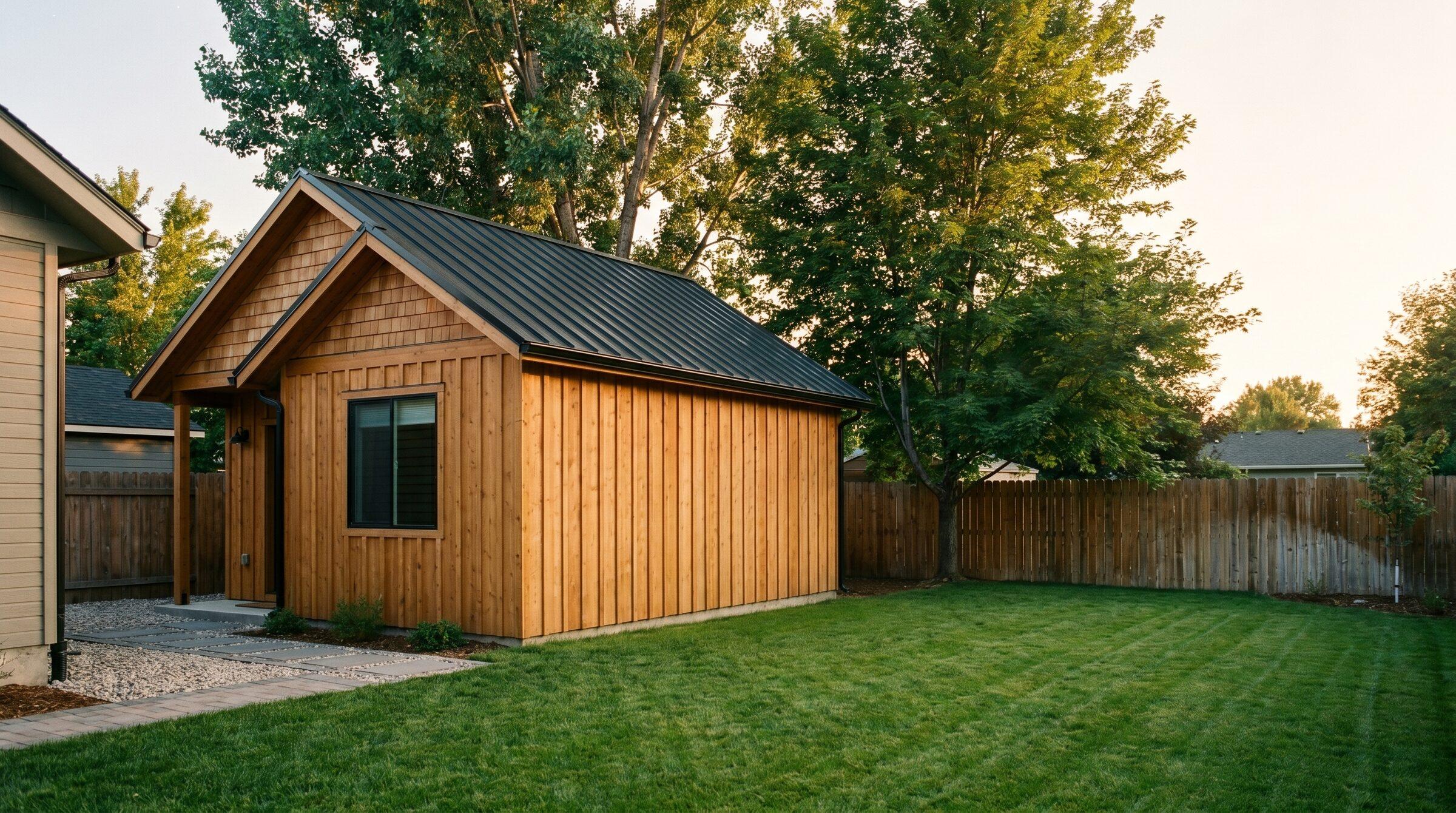
Live-Work-Create District
Garden City's mixed-use arts corridor along Adams Street — galleries, studios, and small-format housing where ADUs often serve as creative-use accessory space.
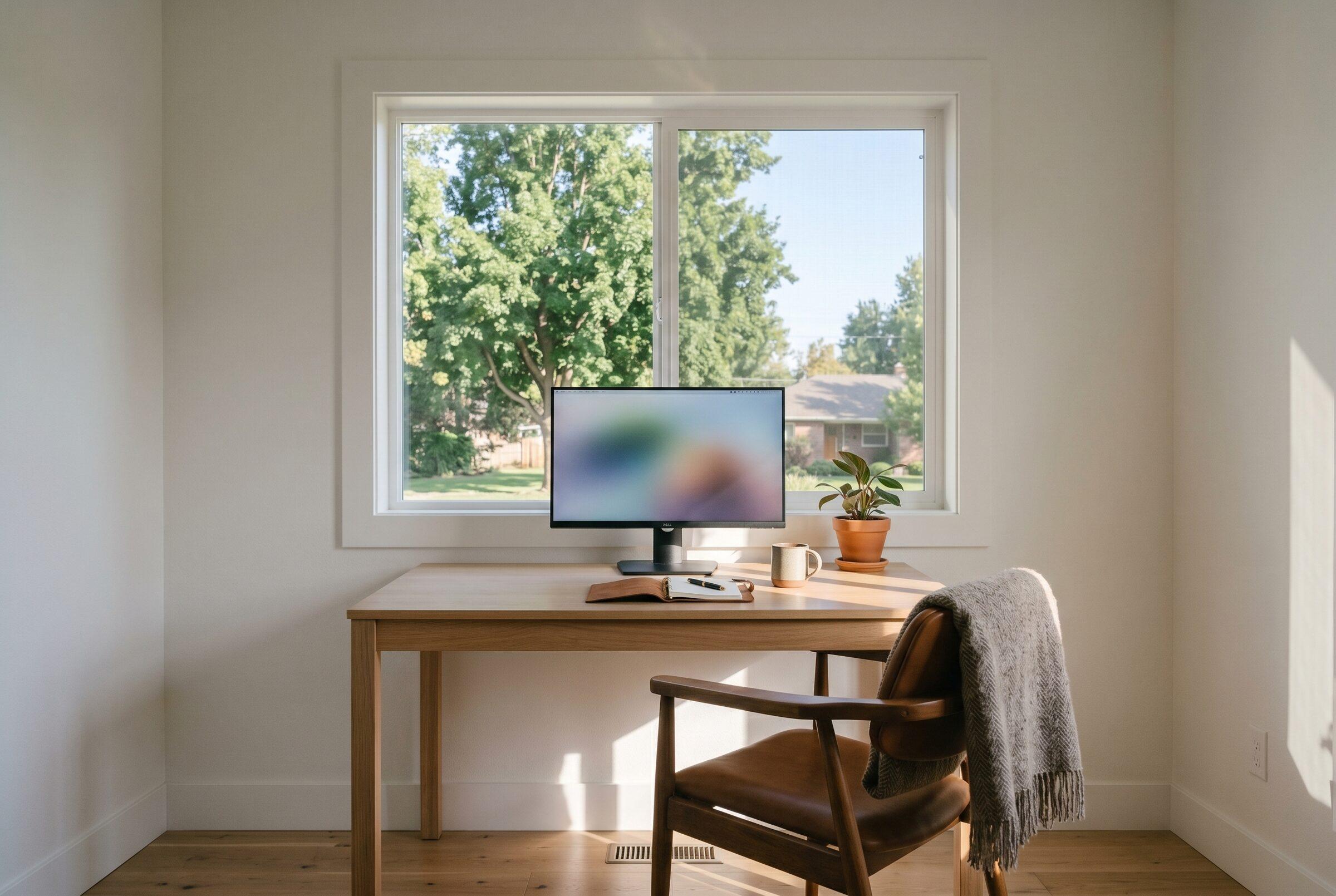
Garden City ADU Specialists
Compact, code-ready accessory dwellings designed for Garden City's distinctive urban lots, mixed-use districts, and Boise River corridor.
ADUs in Garden City
Garden City is its own city — not a Boise neighborhood, not a suburb. Twelve thousand people live in a 4-square-mile pocket completely surrounded by Boise, with separate zoning, separate building review, and a personality that leans creative, riverfront, and brewery-forward. That independence is why we treat Garden City projects as a distinct workflow from Boise projects: the codes, the lot dimensions, and the design vocabulary all read differently.
The city has spent the last decade leaning into density. The Live-Work-Create District along Adams Street and 36th Street invited artists, makers, and small-format housing onto formerly industrial parcels. Plantation Country Club anchors the west end with established single-family stock. Riverside Village and the lots feathering off the Boise Greenbelt blend townhomes, cottages, and accessory units in a way you don't see across the city line. ADUs fit this culture — Garden City has been quietly more permissive than parts of Boise on detached units, mixed-use live-work setups, and creative housing forms.
Most Garden City lots are smaller and more urban than the Ada County average. That's the design constraint we solve for. Our pre-approved 280-square-foot Goldfinch and 396-square-foot Waxwing plans are sized for exactly these conditions: 5-foot setbacks, narrow side yards, alley access, and floodplain margins along the river. We've built within walking distance of Telaya Wine Co., Powderhaus Brewing, and the Greenbelt — and we've learned where the local code surprises live.
Neighborhoods
We've worked across most of Garden City — here are the neighborhoods most homeowners are asking us about.
Garden City's mixed-use arts corridor along Adams Street — galleries, studios, and small-format housing where ADUs often serve as creative-use accessory space.
Walkable strip anchored by Powderhaus, Cinder, and Coiled Wine Bar. Compact lots make Goldfinch and Waxwing studios the most common fit here.
Greenbelt-adjacent neighborhood near the Riverside Hotel. Floodplain considerations apply on lots backing directly to the Boise River.
Older single-family core with mature trees and original mid-century homes. Detached ADUs typically slot into rear yards behind the primary structure.
Established west-end neighborhood around Plantation Country Club. Larger lots here support our Kingfisher and Kestrel plans without setback gymnastics.
Quiet residential pocket near the Hyatt Hidden Lakes Reserve. Standard residential setbacks apply and lot dimensions tend to favor compact studio plans.
Zoning + Permits
Garden City is its own municipality with its own development code — separate from Boise, separate from Ada County. The code is generally more permissive on mixed-use, live-work, and accessory dwellings than surrounding Boise zones, but the river corridor and floodplain overlays add their own layer of review.
Even though you're surrounded by Boise on all sides, your permit goes through the Garden City Planning & Zoning department. Setbacks, height limits, parking minimums, and ADU rules are governed by the Garden City Development Code — not Boise's. We've seen homeowners assume a Boise rule applies and get surprised at intake.
If your parcel falls inside the Live-Work-Create District or one of Garden City's mixed-use overlays, the menu of allowed uses widens significantly. Detached accessory units, live-work studios, and ground-floor commercial paired with upstairs residential are all on the table — but design review is more involved.
Residential side and rear setbacks generally run 5 feet, which is friendlier than some Boise R-zones. Combined with smaller average lot sizes, this is why Goldfinch and Waxwing are the go-to plans here — they're sized to fit setback envelopes that Type C and Type D plans often can't.
Lots fronting or backing the Boise Greenbelt and the river are subject to additional setbacks measured from the high-water line and Greenbelt easement. Build envelopes shrink fast on these lots, and certain detached structures may need to step back further than the base zoning suggests.
Parts of Riverside Village and lots adjacent to the river fall within FEMA-mapped Special Flood Hazard Areas. ADUs in these zones generally require elevated finished floors, flood-resistant materials below the base flood elevation, and an elevation certificate at closeout. We confirm flood status with a parcel lookup before designing.
Why Garden City
Garden City lots routinely sit one or two blocks from the Boise River Greenbelt. An ADU here rents and resells on that proximity alone — tenants pay a premium to bike to downtown Boise on a paved path that runs straight through their backyard.
Telaya, Powderhaus, Cinder, and Coiled Wine Bar are clustered within a few blocks of each other along 36th Street and the Adams corridor. ADUs in this radius lease quickly to renters who want walkable nightlife without paying downtown Boise prices.
You get Boise-level demand, Boise-adjacent comparables, and ten-minute access to downtown — under a separate municipal code that's often more permissive on accessory units and mixed-use forms.
Garden City has historically been friendlier than parts of Boise on detached units, owner-occupancy flexibility in some districts, and live-work configurations. Always verify with current code, but the baseline posture is encouraging rather than restrictive.
Many Garden City parcels are 40 to 50 feet wide. Our 280 and 396-square-foot studios are sized to clear setback envelopes that larger Type C and Type D plans can't, so you don't waste a year redesigning around your lot.
In the Live-Work-Create District and mixed-use overlays, design review tolerates — and often rewards — modern, industrial, and unconventional facades. You're not locked into beige stucco. Standing-seam metal, dark-stained wood, exposed steel, and sliding barn doors all clear review here.
Recommended Plans
The City of Boise's pre-approved plans work in every Treasure Valley jurisdiction. Here are the picks that fit this city's lots and rental market best.
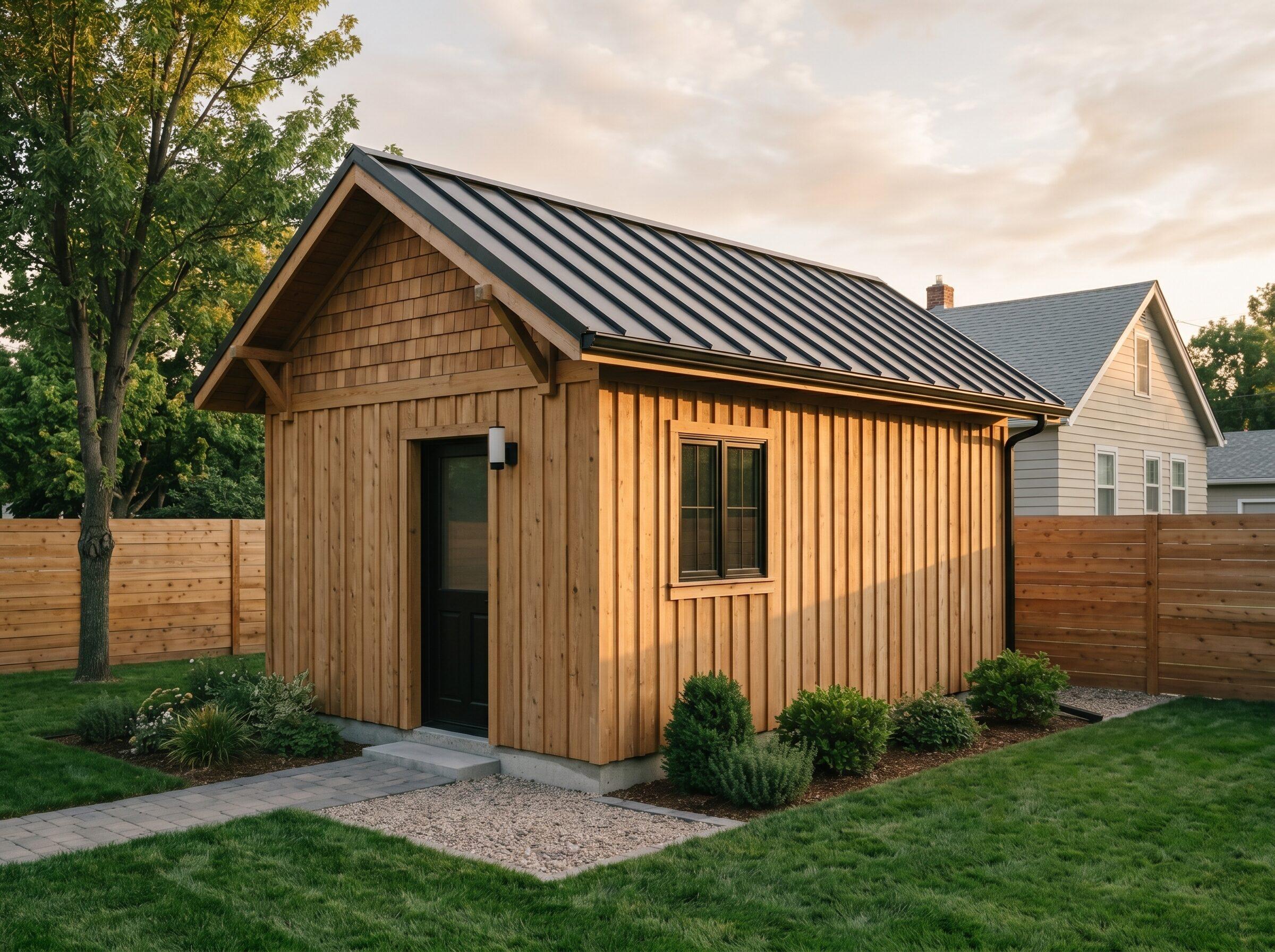 Type A
From $115k
280 sq ft · Studio · 1 ba
280-square-foot Type A studio. Our most-built plan in Garden City because it fits 5-foot setbacks on narrow urban lots without site-specific redesign. Starts at $115k.
See the The Goldfinch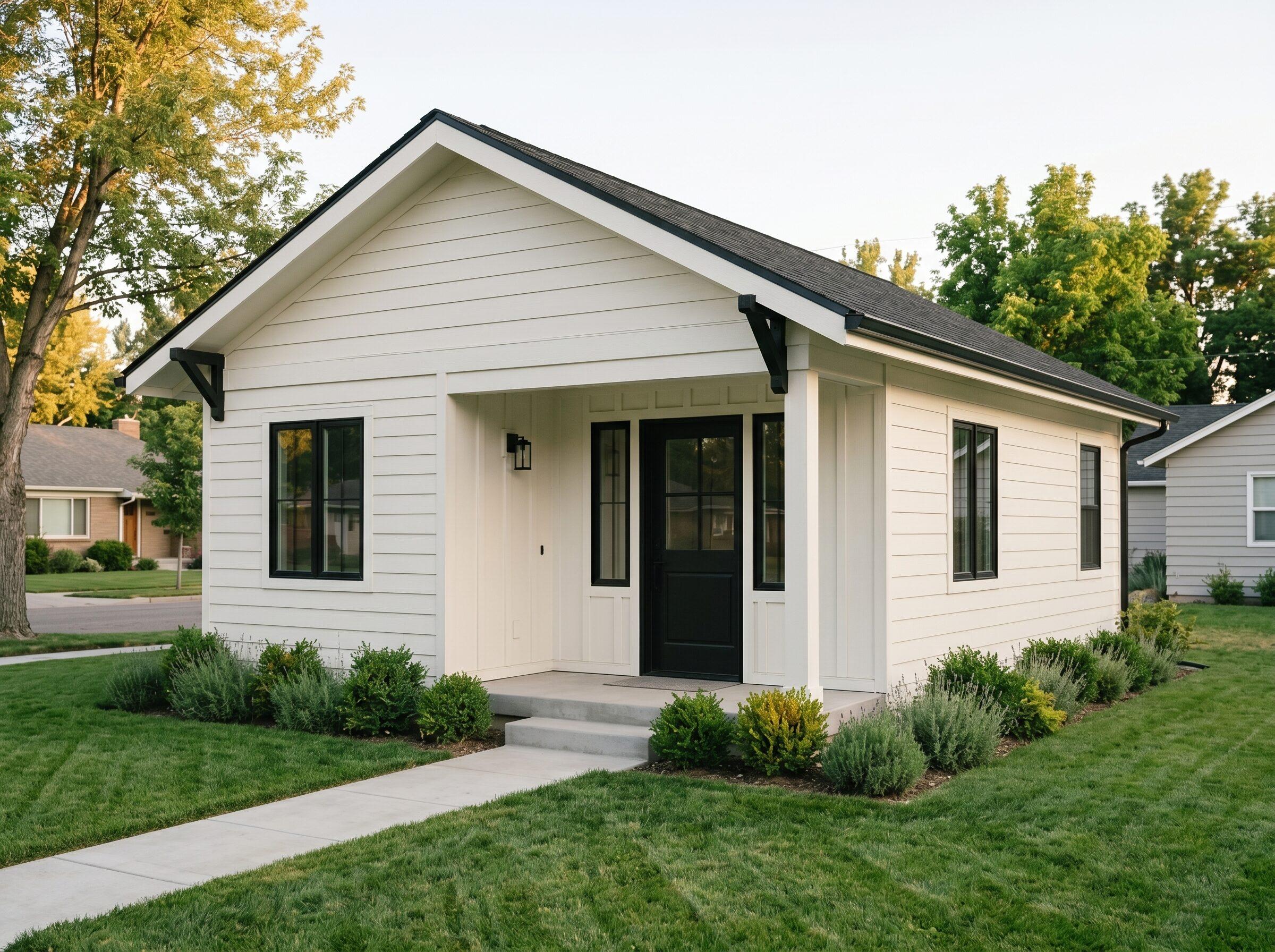 Type B
From $135k
396 sq ft · Studio · 1 ba
396-square-foot Type B studio at $135k. Slightly more interior volume than Goldfinch — the right call when you have a few extra feet of side yard or want a larger kitchen for long-term tenants.
See the The Waxwing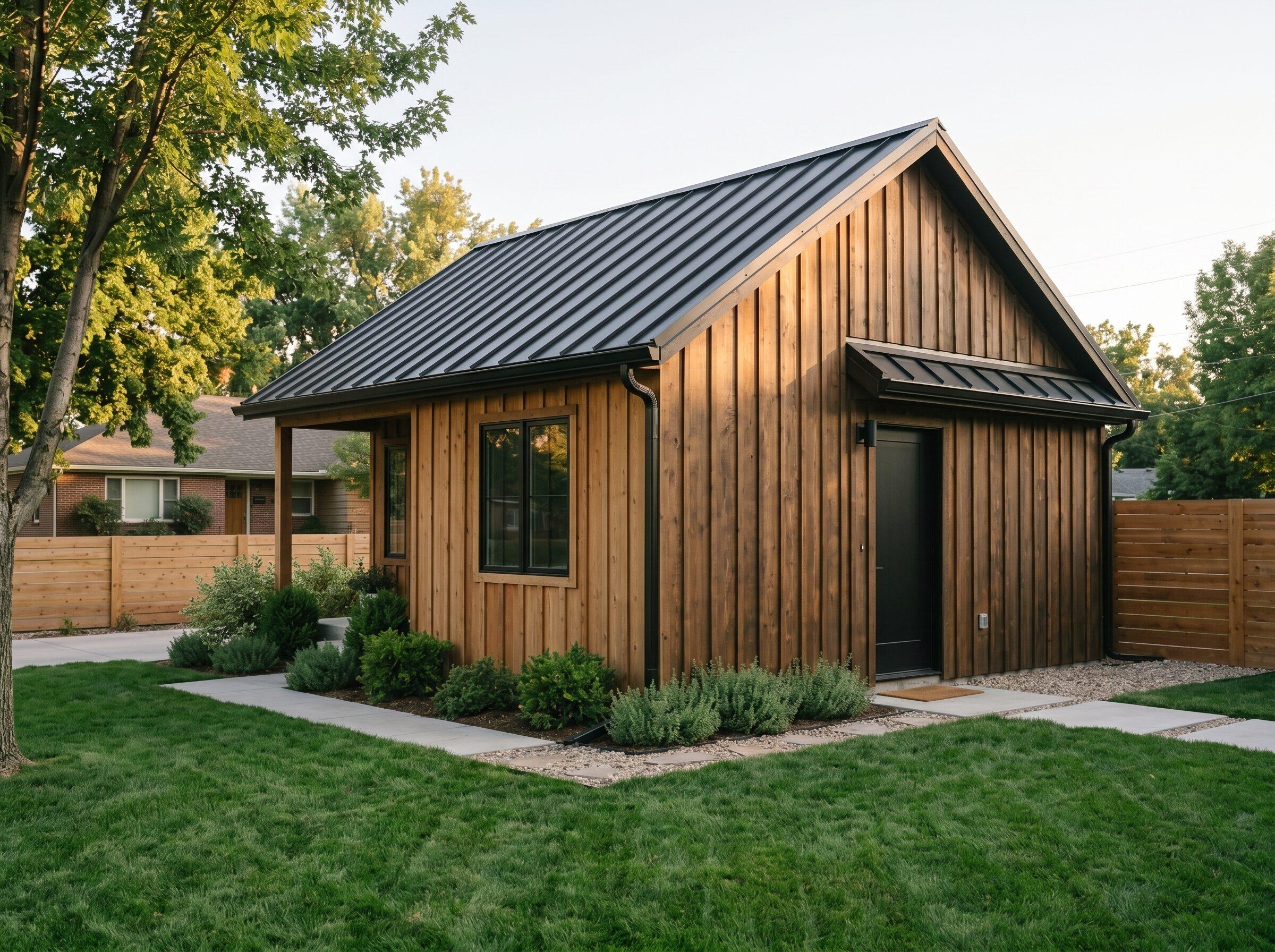 Type C
From $170k
491 sq ft · 1 · 1 ba
491-square-foot one-bedroom Type C from $170k. The plan we recommend in Plantation, Hyatt-area, and any Garden City lot with enough rear-yard depth to clear the build envelope cleanly.
See the The KingfisherSee Garden City ADU cost by plan →See completed Garden City ADU builds in the gallery →
Plans priced for this city
Local cost, estimated rent, and gross yield for every pre-approved plan in Garden City — pick the one that fits your lot and your numbers.
| Plan | Size | From | Est. Garden City rent | Gross yield | Link |
|---|---|---|---|---|---|
| Goldfinch | 280 sqft · studio | $115k | $1,200–$1,450 | 11.3–17.1% | Goldfinch in Garden City — View plan |
| Waxwing | 396 sqft · studio | $135k | $1,200–$1,450 | 8–12.1% | Waxwing in Garden City — View plan |
| Kingfisher | 491 sqft · 1-bedroom | $170k | $1,400–$1,700 | 7.5–11.4% | Kingfisher in Garden City — View plan |
| Kestrel | 695 sqft · 2-bedroom | $245k | $1,800–$2,175 | 6.9–10.3% | Kestrel in Garden City — View plan |
| Sandpiper | 396 sqft · studio | $145k | $1,200–$1,450 | 8–12.1% | Sandpiper in Garden City — View plan |
| Osprey | 376 sqft · studio | $140k | $1,200–$1,450 | 8.4–12.7% | Osprey in Garden City — View plan |
Rent scaled from Garden City's sourced 1-bedroom median by unit size; gross yield is rent ÷ Standard-finish build. Estimates, not financial advice.
Recent projects
Real Garden City-area ADU projects — the plan, the lot, and how it came together.
Garden City Lot Realities
Local specifics — not generic Treasure Valley copy.
Garden City has its own development code separate from Boise, with mixed-use overlays that thread through residential areas — particularly along Chinden Boulevard, 36th Street, and the Greenbelt corridor. Lots near the brewery and live-work districts may carry overlays that affect setbacks, parking, and use. Pull both the city's zoning lookup and the Ada County Assessor plat before assuming Boise's rules apply.
Garden City lots vary widely — older 50' × 100' grid lots near downtown and the Greenbelt, narrow 35-45' wide live-work lots along 36th Street, and larger 70'+ residential lots in the northern and eastern parts of the city. The narrow lots are why custom plans show up more often in Garden City than in Boise — pre-approved plans don't always fit the side-yard envelope.
Garden City splits more evenly between detached and conversion than other Treasure Valley cities. The older grid neighborhoods south of Chinden often have alley-loaded detached garages that convert well. The northern subdivisions favor detached new builds. The live-work corridor along 36th Street is the place where custom plans most commonly out-perform pre-approved on rental yield.
Garden City builds run at parity with Boise on labor and materials. The cost variables specific to this city: (1) older lots may need sewer lateral upgrades through Garden City's separate public works system, (2) lots near the Greenbelt or in floodplain overlays trigger elevation requirements that add foundation cost, and (3) the live-work corridor sees premium rents that justify Premium-finish builds.
"We had a narrow lot off 36th Street, two doors from Powderhaus, and every general contractor told us we'd need a custom design. The Goldfinch dropped in with the standard 5-foot setbacks and we leased it the week the certificate of occupancy came through."
Allison R.
Garden City Goldfinch ADU near 36th Street breweries · Garden City, ID
FAQ
Garden City is a separate municipality with its own development code, planning department, and permit process — even though it's geographically inside Boise. The two cities use different zoning categories, different setback tables, and different ADU rules. Garden City is generally more permissive on mixed-use and accessory dwellings, but you can't rely on Boise precedent. We confirm requirements directly with Garden City Planning & Zoning on every project.
Lots adjacent to the Boise River Greenbelt are subject to additional setback and easement requirements measured from the high-water line and the Greenbelt right-of-way, on top of the base residential setbacks. This can shrink the buildable area on a riverside lot by 20 feet or more. We pull the parcel survey and confirm Greenbelt boundaries before we propose a plan.
Some of Garden City — particularly along Riverside Village and lots fronting the Boise River — falls inside FEMA-mapped Special Flood Hazard Areas. If yours does, the ADU typically needs an elevated finished floor above the base flood elevation, flood-resistant materials below that elevation, and an elevation certificate at the end of the project. We run a free flood-zone check on every Garden City address before we quote.
If your parcel sits inside the Live-Work-Create District or one of Garden City's mixed-use overlays, the allowed uses go beyond standard residential. You may be permitted to use the ADU as a studio, a small commercial space, or a live-work unit — not just a rental dwelling. The application path is different, design review is more involved, and the upside is significant for owners who want flexibility.
Garden City has historically been more permissive than Boise on owner-occupancy, and certain districts allow non-owner-occupied accessory dwellings. The current rules vary by zoning district and can change, so we verify the live requirement at intake rather than relying on what was true last year. If owner-occupancy matters to your investment plan, ask us to confirm before you sign.
Garden City lots are smaller on average than the rest of Ada County. The 280-square-foot Goldfinch and 396-square-foot Waxwing are the only pre-approved plans that reliably clear 5-foot setbacks on a 40 to 50-foot-wide lot without site-specific redesign. On larger Plantation or Hyatt-area lots we'll happily build a Kingfisher or Kestrel, but on the urban core lots near the breweries, the smaller studios are usually the only fit.
Nearby Areas
Zoning verified against City of Garden City / Ada County code — last reviewed May 2026.
Garden City, Idaho
Free estimate in 24 hours. We'll cover your property, the city's zoning, and the right pre-approved plan to fit your lot.