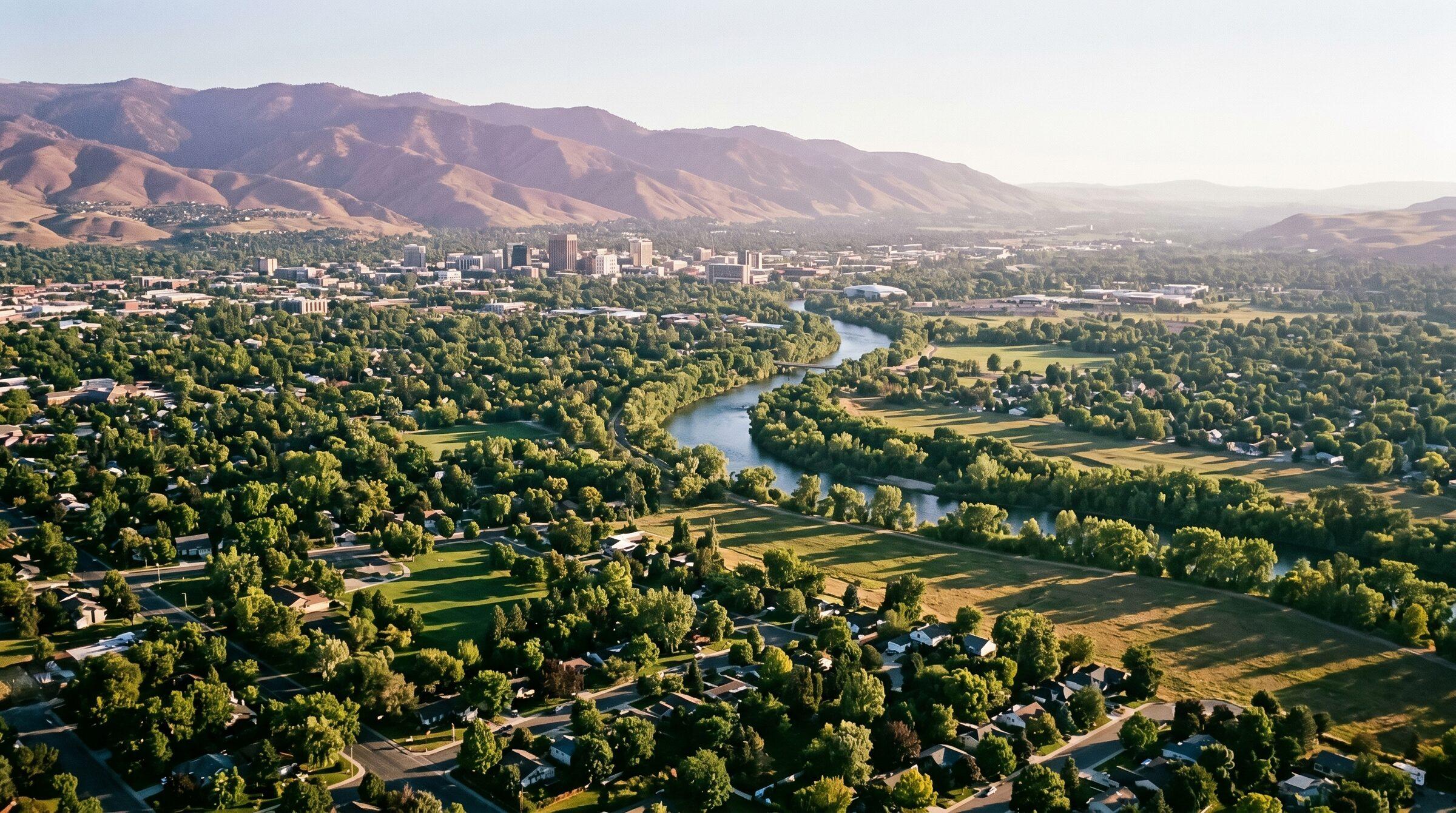
The Treasure Valley is the Boise metro — the federally defined Boise City MSA covers Ada, Canyon, Gem, and Owyhee counties, and the everyday valley spills into Payette and Elmore at the edges. The two cores, Ada and Canyon, held roughly 877,000 residents in 2025 (COMPASS estimate) after adding about 150,000 people in six years, which makes it one of the fastest-growing metros in the country. That growth is the whole reason an ADU pencils out here: deep, durable tenant demand and a road network straining to keep up.
The single biggest split in the valley is the county line. Ada County sits entirely inside the Ada County Highway District (ACHD) — one countywide road authority that charges a transportation impact fee of $5,803 per single-family dwelling effective March 1, 2026 (ordinance No. 254). Canyon County has no ACHD; it's served by four independent highway districts (Nampa, Notus-Parma, Golden Gate, and Canyon), each with its own approach and fee approach. The practical result is that the same plan often costs less to permit in Nampa or Caldwell than in Boise or Eagle, and Canyon County rents and lot prices run lower too.
The other thing that sets the valley apart is Boise's pre-approved ADU plan program — the City of Boise released a free catalog of permit-ready ADU designs in March 2026, the first program of its kind in Idaho, drawn up with a local architecture firm. Those plans are engineered to clear Boise's rules, which were rewritten in December 2023 to drop owner-occupancy, scrap the parking minimum, and raise the maximum ADU size to 900 square feet. And Idaho Senate Bill 1354 — signed March 31, 2026, effective July 1, 2026 — preempts owner-occupancy mandates and bans outright ADU prohibitions for every Idaho city over 10,000 people, which sweeps in Boise, Meridian, Nampa, Caldwell, and more. The upshot for a homeowner: the question isn't whether you can build, it's which county and city rules apply to your parcel — and we verify that before anyone signs.